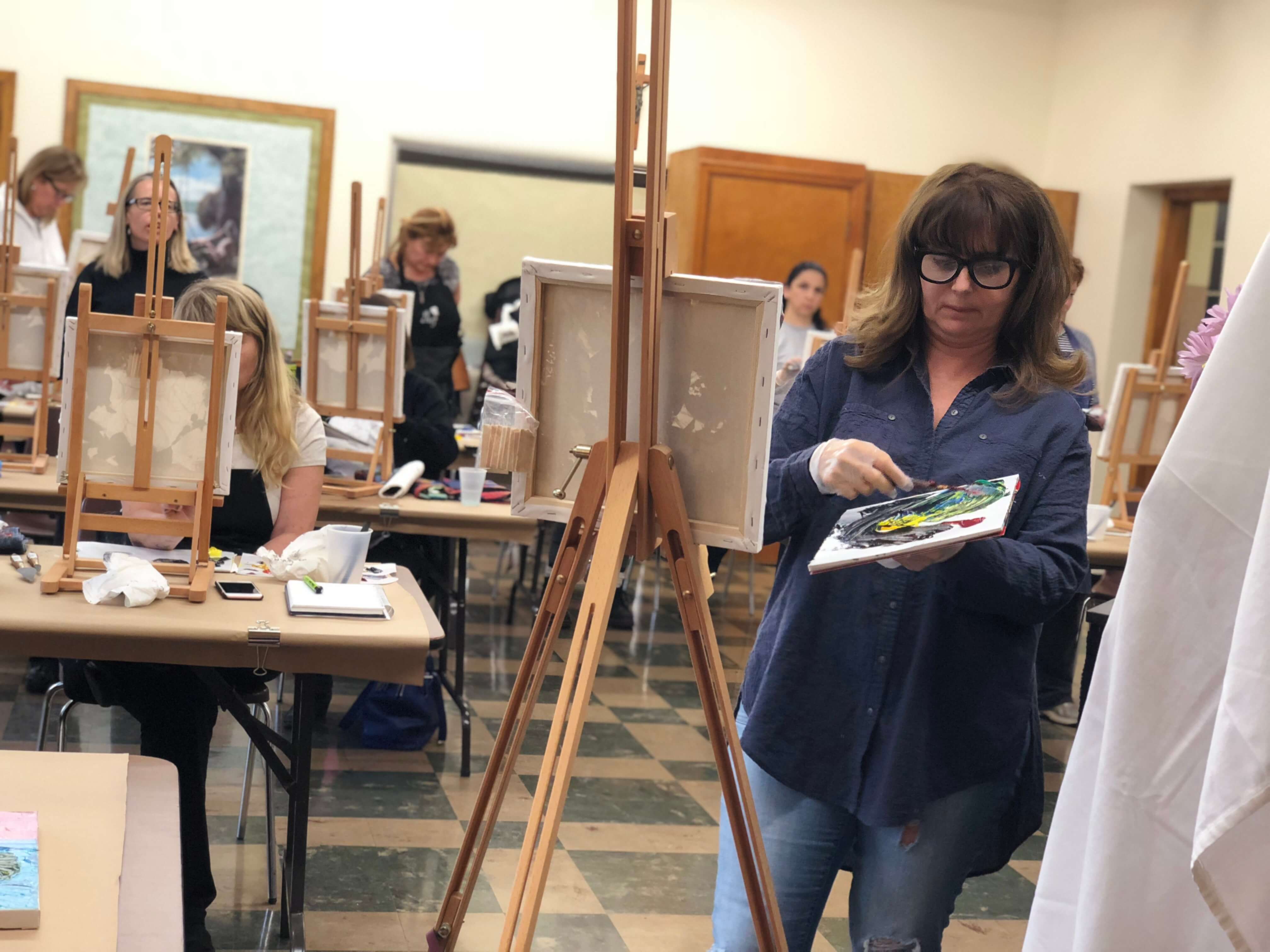
Acrylic Palette-Knife Mastery and the Art of Texture
The Essence of Maya Eventov’s Process
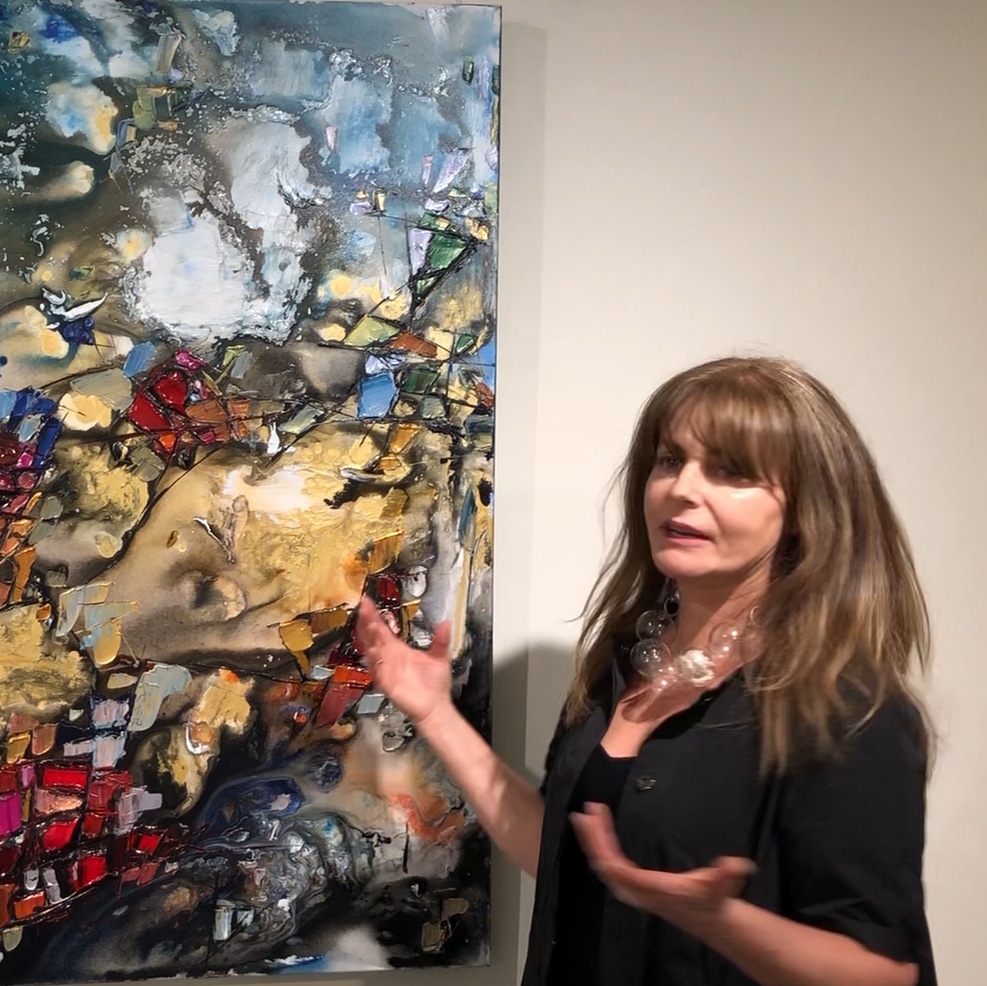
Maya Eventov paints primarily with acrylics, applied with a palette knife rather than brushes. This choice defines her signature impasto style — thick, sculpted layers of paint that catch light and create a sense of movement and depth. Acrylic allows her to build rich color passages quickly, giving each work a vibrant energy that feels almost three-dimensional.
“I love how a palette knife lets me carve into the paint,” Eventov has said in interviews. “It’s like sculpting color — shaping emotion in every stroke.”
Her compositions balance structure and spontaneity: bold verticals in birch forests, sweeping gestures in abstracts, and radiant warmth in her figurative works. The tactile surface invites viewers to experience the artwork not only visually but emotionally, through texture and reflection.
Tools of the Trade

- Medium: Heavy-body acrylic paint on primed canvas
- Tools: Stainless-steel palette knives of varying sizes
- Surface: Stretched canvas or gallery-wrap panels
- Varnish: Archival acrylic varnish for UV protection and soft gloss finish
Eventov’s palette knives act like extensions of her hand. Instead of fine brushwork, she layers colors wet-on-wet, allowing them to blend directly on the canvas. The result is a mosaic of luminous texture that changes subtly with light and angle.
Why She Uses the Impasto Technique

Impasto painting — where paint is applied thickly enough to stand out from the surface — creates a sculptural quality that amplifies emotion and light. For Eventov, impasto is a natural fit for her expressive subject matter.
- Depth: The raised surface adds shadows and highlights that shift through the day.
- Energy: Bold, confident knife strokes convey motion and rhythm.
- Longevity: Acrylic impasto dries durable and flexible, preserving texture for decades.
This approach bridges painting and sculpture, transforming two-dimensional canvas into a living surface of color and form.
Studio Practice and Preparation
In her Toronto studio, Eventov mixes her paints directly on the knife, layering color intuitively rather than pre-blending on a palette. Each piece begins with a rough sketch in thin acrylic, then she gradually builds the surface with thicker layers.
Between sessions, she steps back to evaluate composition and light. Because acrylic dries quickly, she can rework passages within hours, maintaining both spontaneity and structure.
Caring for an Original Maya Eventov Painting
Owning an Eventov original means owning a highly textured surface. Proper care preserves its brilliance:
- Display indoors, out of direct sunlight.
- Dust gently with a soft, dry microfiber cloth (never use liquid cleaners).
- Avoid touching raised areas, as natural oils can dull the finish.
- All pieces are sealed with a professional varnish for protection.
Each painting is shipped ready to hang, either gallery-wrapped or professionally framed, accompanied by a signed Certificate of Authenticity.
Common Questions
Is Maya Eventov’s work acrylic or oil?
All of Maya Eventov’s recent originals are created with acrylic paint on canvas. Acrylics give her the speed and flexibility her impasto palette-knife style requires. In the late 1990s, Maya transitioned away from oil paints due to sensitivity to their fumes.
Does she use resin or mixed media?
No — Maya’s signature texture comes entirely from acrylic paint applied with a palette knife. Each layer is built up to create depth and reflection without the use of resin or other media.
Why does she use a palette knife instead of a brush?
The palette knife allows Maya to create crisp edges, bold gestures, and dimensional layering that brushes can’t achieve. It’s central to her expressive visual language. That said, she occasionally incorporates brushwork when a specific technique enhances the composition — as seen in her “Spectrum” series.
How is each artwork finished?
Maya uses high-quality, UV-resistant acrylic paints, some of which are custom-mixed to her exacting standards for color and pigment richness. No additional varnish is required, though optional finishes can be applied depending on display conditions. Our gallery can advise on the best option, based on our long working relationship with the artist since 1990.